
Microscopy
Microscopy enables researchers to visualize biological, chemical, and material systems with extraordinary spatial resolution and sensitivity. Advanced techniques such as fluorescence, Raman, multiphoton, nonlinear, and single-molecule microscopy reveal structures and processes that are invisible to conventional imaging. Tunable laser sources provide the flexibility needed to optimize contrast, depth penetration, and molecular specificity.

Single-Molecule Microscopy
Observing individual molecules provides a unique window into the fundamental processes that govern biological and chemical systems. By tracking molecular interactions, dynamics, and structural changes at the single-molecule level, researchers can uncover details that are often hidden in ensemble measurements. Tunable laser sources enable precise excitation of fluorescent probes, enhancing sensitivity and expanding the range of molecules and processes that can be studied.

Raman Microscopy
Raman microscopy combines high-resolution imaging with molecular-level chemical analysis, revealing the composition and structure of samples without the need for labels or dyes. By mapping molecular vibrations across a specimen, researchers can study biological tissues, advanced materials, and chemical processes with exceptional specificity.

Time-Resolved Fluorescence Microscopy
Following how fluorescence evolves over time reveals information that cannot be obtained from intensity measurements alone. By monitoring fluorescence lifetimes, researchers can investigate molecular interactions, cellular environments, and biological dynamics with exceptional sensitivity. Tunable laser sources provide the flexibility to selectively excite fluorescent probes, enabling more detailed and quantitative imaging of complex biological systems.

Two-Photon Microscopy
Exploring deep within biological tissues requires imaging techniques that combine high resolution with minimal photodamage. By using the simultaneous absorption of two photons to excite fluorescence, researchers can visualize structures and processes far below the sample surface with exceptional contrast. Tunable laser sources enable efficient excitation across different fluorophores, supporting advanced imaging in neuroscience, developmental biology, and biomedical research.

Fluorescence Microscopy
Visualizing specific structures and processes within complex samples has transformed the study of biological and material systems. By detecting the light emitted from fluorescent markers, researchers can achieve high-contrast imaging with excellent specificity. This approach enables detailed investigation of cells, tissues, and dynamic processes, providing valuable insight into the organization and function of complex systems.

Optimising your microscopy set-up?
Our team can advise on the right broadly tunable laser system for your imaging technique, from multiphoton to Raman microscopy.
Download our systems brochure
Browse our high-performance, broadly tunable laser systems for scientific and industrial applications
Request successful
Check your email for the product catalog
Sorry, the enquiry was not sent
There seems to be an issue with your form submission. Please try again, if this error persists contact sales@radiantis.com
Relevant Resources

Background-Free 3D Nanometric Localization and Sub-nm Asymme…
Despite many advances, rapid, precise 3D tracking of nanoscale particles in a complex environment remains chall……
Single-molecule and-particle probing crystal edge/corner as …
The exposed active sites of semiconductor catalysts are essential to the photocatalytic energy conversion effic……
Visible-wavelength two-photon excitation microscopy with mul…
Two-photon excitation microscopy is one of the key techniques used to observe three-dimensional (3-D) structure……
A red-shifted two-photon-only caging group for three-dimensi…
With a new photolabile protecting group – exclusively cleavable by two-photon-excitation – complex light sc……
Effects of fixatives on myelin molecular order probed with R…
When live imaging is not feasible, sample fixation allows preserving the ultrastructure of biological samples f……
RP-CARS reveals molecular spatial order anomalies in myelin …
Krabbe disease (KD) is a rare demyelinating sphingolipidosis, often fatal in the first years of life. It is cau……
Femtosecond-Laser-Pulse Characterization and Optimization fo…
We present a simple method and its experimental implementation to determine the pulse durations and linear chir……
A large-field polarisation-resolved laser scanning microscop…
Laser‐scanning imaging techniques are frequently used to probe the molecule spatial orientation in a sample o……
Two-Photon Lithography of 3D Nanocomposite Piezoelectric Sca…
In this letter, we report on the fabrication, the characterization, and the in vitro testing of structures suit……
Broadband near-infrared hyperbolic polaritons in MoOCl2
Hyperbolic polaritons have drawn great attention in nanoscale light manipulation due to their unique properties……
Front-contact passivation through 2D/3D perovskite heterojun…
Read paper in full …
Revealing low-loss dielectric near-field modes of hexagonal …
Low-loss dielectric modes are important features and functional bases of fundamental optical components in on-c……
Ultrafast Electron Cooling and Decay in Monolayer WS2 Reveal…
by time- and energy-resolved photoemission electron microscopy (PEEM). Electron cooling in the Q valley of the ……
Preserving the Emission Lifetime and Efficiency of a Monolay…
Monolayer transition metal dichalcogenides (TMDs) are promising semiconductors for nanoscale photonics and opto……
Second harmonic generation in monolithic gallium phosphide m…
Gallium phosphide (GaP) offers unique opportunities for nonlinear and quantum nanophotonics due to its wide opt……
Erbium doping of lithium niobate on insulator using low-temp…
We propose an optimized low-temperature ion exchange method for fabricating an erbium-doped lithium niobate on ……
Near-field terahertz nonlinear optics with blue light
The coupling of terahertz optical techniques to scattering-type scanning near-field microscopy (s-SNOM) has rec……
Spatially engineered nonlinearity in resonant metasurfaces
Spatial engineering of the nonlinear susceptibility χ ( 2 ) in resonant metasurfaces offers a new degree of fr……
Correlative light-electron microscopy using small gold nanop…
Correlative light-electron microscopy (CLEM) requires the availability of robust probes which are visible both ……
Simultaneous microscopic imaging of thickness and refractive…
The detection of spatial or temporal variations in very thin samples has\nimportant applications in the biologi……
Selective activation of cholinergic neurotransmission from t…
BackgroundSepsis-associated encephalopathy is characterised by cognitive dysfunction, and might be mediated by ……
Homo-FRET Based Biosensors and Their Application to Multiple…
Multiplexed imaging of Förster Resonance Energy Transfer (FRET)-based biosensors potentially presents a powerf……
Explore our products

CW Laser Systems
Continuous-Wave broadly tunable laser systems with integrated pump laser and OPO. Hands-free wavelength tuning in the Near-IR and Mid-IR across 1450 – 4000 nm with superior power and stability.

Ultra Short Pulse Lasers
Femtosecond and picosecond broadly tunable laser systems with integrated pump laser and OPO. Hands-free wavelength tuning in the Near-IR and Mid-IR across 1400 – 7000 nm with superior power and stability.
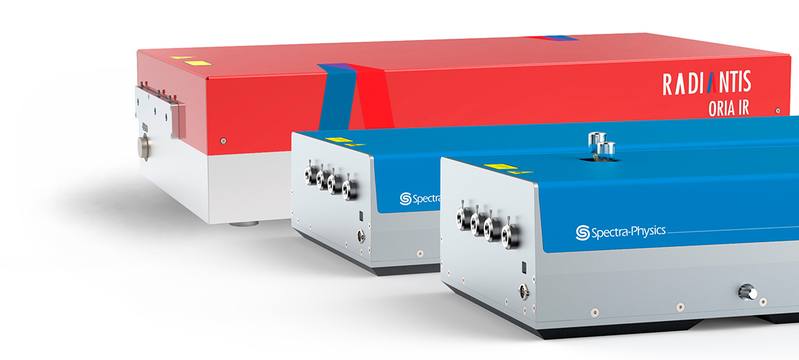
Optical Parametric Oscillators – OPOs
Femtosecond OPOs pumped by mode-locked Ti:Sapphire lasers. Hands-free rapid wavelength tuning in the Visible, Near-IR and Mid-IR gap-free across 340 – 4000 nm.

Second Harmonic Generators
Harmonic generators to double the frequency of external mode-locked femtosecond and picosecond Ti:Sapphire lasers and femtosecond IR OPOs. Spectral coverage across 340 – 750 nm. Best-in-class conversion efficiency. Hands-free operation and plug-and-play installation.
What our customers say about us
-
Professor Romain Quidant
ICFO, Spain
-
Dr Pier Sazio
University of Southampton, United Kingdom, Senior Research Fellow, Optoelectronics Research Centre
“
Radiantis were very flexible with our requirements and perfectly matched to our technical needs and budget. Radiantis OPO has enabled us to carry out advanced optical characterisation of our systems across the UV, Visible and IR, and has proven to be a very reliable and easy-to-use system, delivering high and stable power and fast automated tuning across the complete spectral range. Radiantis team were very friendly and provided a professional and comprehensive user training to key researchers in my lab, which enabled us to operate the OPO successfully and reliably over many years.
”
“
The wide tuning range of our Radiantis OPO system has allowed us to access wavelength regimes that have enabled a number of nonlinear optics experiments that would otherwise not have been possible. Radiantis have been very responsive and any problems have always been dealt with swiftly, with engineers being sent over to our lab for extended visits whenever required.
”