
About Quantum Technology
Quantum technology harnesses the unique properties of quantum systems to enable breakthroughs in computing, communication, sensing, and precision measurement. By controlling and manipulating quantum states with increasing accuracy, researchers are opening new frontiers in science and engineering, driving innovations that promise to transform both fundamental research and real-world applications.

Tunable Lasers for Quantum Technology
Radiantis products contribute to quantum innovation through three key technologies: laser cooling and trapping for ultra-cold temperatures, photon entanglement for quantum communication and computing, and Rydberg excitation for exploring atomic states with extreme sensitivity.
Laser Cooling and Trapping
Achieving precise control over atoms and molecules is fundamental to many quantum technologies. By cooling particles to ultralow temperatures and confining them in controlled environments, researchers can explore quantum phenomena with exceptional precision. Frequency-stabilized lasers locked to atomic transitions enable accurate quantum control, supporting advances in quantum computing, quantum sensing, atomic clocks, quantum navigation, and precision metrology.

Quantum Computing
Understanding and controlling quantum states is opening new pathways for computation beyond the capabilities of classical systems. By harnessing phenomena such as superposition and entanglement, researchers are developing powerful approaches to information processing and quantum simulation. Highly stable frequency-locked laser sources enable precise quantum state control, supporting the development of scalable quantum computers for science, engineering, and optimization.

Quantum Sensing
Harnessing the extraordinary sensitivity of quantum systems enables measurements beyond the limits of classical technologies. By exploiting quantum states and coherence effects, researchers can detect minute changes in time, magnetic fields, acceleration, and gravity with unprecedented precision. These capabilities are driving advances in precision metrology, quantum sensing, Quantum PNT (Positioning, Navigation, and Timing), and next-generation measurement systems.

Quantum Communication
Exploring new ways to transmit and protect information is driving the development of quantum communication technologies. By harnessing quantum phenomena such as entanglement and quantum state transfer, researchers are creating fundamentally secure communication methods, including Quantum Key Distribution (QKD). These advances are laying the foundations for quantum-secure infrastructures and long-distance quantum information exchange.

Quantum Frequency Conversion
Bridging quantum systems operating at different wavelengths is essential for future quantum networks. Quantum frequency conversion uses nonlinear optical processes to coherently translate quantum states between spectral regions while preserving their quantum properties. Driven by advanced laser sources, it enables efficient links between quantum memories, communication channels, and computing platforms, supporting scalable quantum technologies.

Download our systems brochure
Browse our high-performance, broadly tunable laser systems for scientific and industrial applications
Request successful
Check your email for the product catalog
Sorry, the enquiry was not sent
There seems to be an issue with your form submission. Please try again, if this error persists contact sales@radiantis.com
Relevant Resources

A tunable transition metal dichalcogenide entangled photon-p…
Entangled photon-pair sources are at the core of quantum applications like quantum key distribution, sensing, a……
Experimental estimation of the dimension of classical and qu…
Is it possible to deduce the number of dimensions of a completely unknown system only from the results of measu……
Multipli-entangled photon spontaneous parametric down-conver…
Read paper in full …
Explore our products

CW Laser Systems
Continuous-Wave broadly tunable laser systems with integrated pump laser and OPO. Hands-free wavelength tuning in the Near-IR and Mid-IR across 1450 – 4000 nm with superior power and stability.

Ultra Short Pulse Lasers
Femtosecond and picosecond broadly tunable laser systems with integrated pump laser and OPO. Hands-free wavelength tuning in the Near-IR and Mid-IR across 1400 – 7000 nm with superior power and stability.
Optical Parametric Oscillators – OPOs
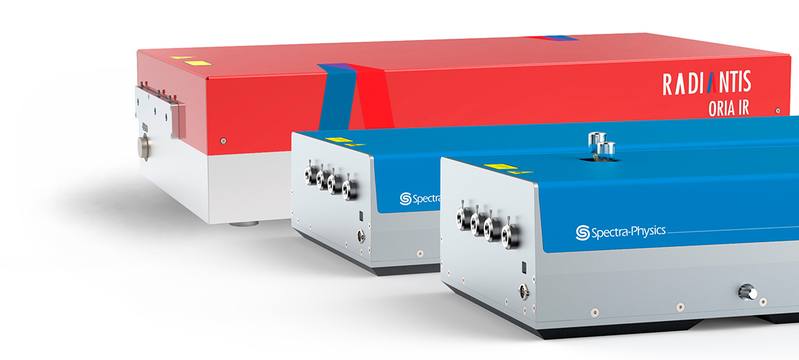
Femtosecond OPOs pumped by mode-locked Ti:Sapphire lasers. Hands-free rapid wavelength tuning in the Visible, Near-IR and Mid-IR gap-free across 340 – 4000 nm.

Second Harmonic Generators
Harmonic generators to double the frequency of external mode-locked femtosecond and picosecond Ti:Sapphire lasers and femtosecond IR OPOs. Spectral coverage across 340 – 750 nm. Best-in-class conversion efficiency. Hands-free operation and plug-and-play installation.
What our customers say about us
-
Professor Romain Quidant
ICFO, Spain
-
Dr Pier Sazio
University of Southampton, United Kingdom, Senior Research Fellow, Optoelectronics Research Centre
“
Radiantis were very flexible with our requirements and perfectly matched to our technical needs and budget. Radiantis OPO has enabled us to carry out advanced optical characterisation of our systems across the UV, Visible and IR, and has proven to be a very reliable and easy-to-use system, delivering high and stable power and fast automated tuning across the complete spectral range. Radiantis team were very friendly and provided a professional and comprehensive user training to key researchers in my lab, which enabled us to operate the OPO successfully and reliably over many years.
”
“
The wide tuning range of our Radiantis OPO system has allowed us to access wavelength regimes that have enabled a number of nonlinear optics experiments that would otherwise not have been possible. Radiantis have been very responsive and any problems have always been dealt with swiftly, with engineers being sent over to our lab for extended visits whenever required.
”